
Contents
- Birth and upbringing
- Seeking Knowledge and Islamic Training
- Settling in Nahr al-Bared Camp and the Beginning of His Da'wah
- His First Hajj
- Work and Profession
- His Path in Da‘wah and Teaching
- His Approach to Da'wah and His Intellectual Positions
- His Creed in Tawhid
- Palestine in His Thought and Speech
- Books and His Scholarly Library
- Displacement and the Resumption of His Da'wah
- Family life
- His Impact on the Community and His Contributions
- Key milestones in his life
- The Significance of Documenting His Life
- Conclusion
OneBirth and upbringing
Sheikh Ahmad Abdelghani was born in 1936 in the village of Saffuriyya, one of the villages of Palestine in the Nazareth District. He grew up in a community known for its faith and righteousness, and received his early education in his birthplace, before the Palestinian Nakba overturned his life and the life of his family.
In 1948 he was displaced with his parents from Saffuriyya to Lebanon, and so began the journey of exile, with all its hardship, moving from place to place and separation from the homeland. This experience left a deep mark on him, and Palestine and its cause remained present in his memory and in his words throughout his life.
TwoSeeking Knowledge and Islamic Training
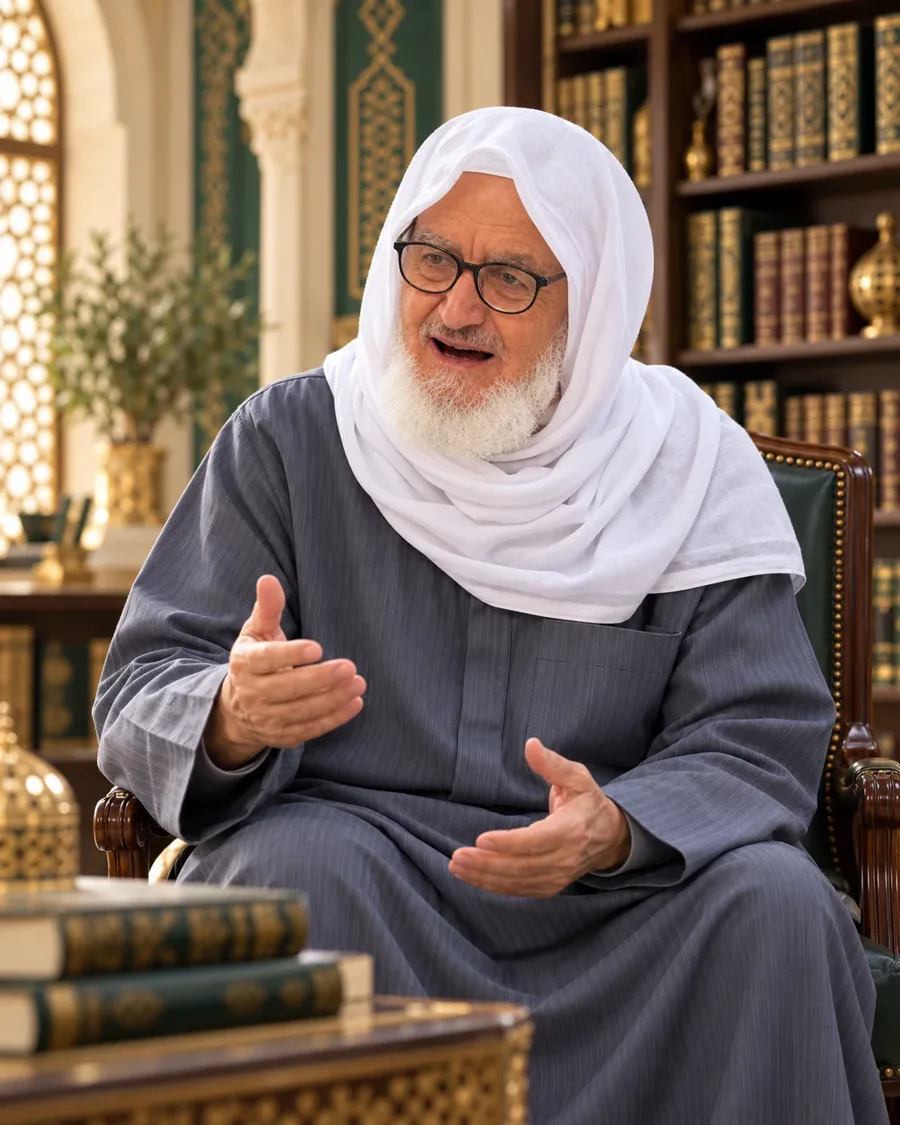
The Sheikh's devotion to knowledge did not stop at formal schooling. He continued to learn through reading and private study, and by sitting with scholars and sheikhs and benefiting from them, and he remained close to books and to people of knowledge at every stage of his life.
In the 1950s he studied part of the Islamic sciences under a number of scholars and sheikhs, among them:
- The eminent Quran commentator Dr. Fadl Hasan Abbas, from whose knowledge he drew between 1955 and 1960.
- Sheikh Muhammad Junaid al-Umari, a Kurd from Diyarbakir, with whom he studied Shafi'i jurisprudence between 1955 and 1957.
- Sheikh Muhammad Salim al-Umari, a Kurd from Diyarbakir, with whom he studied Arabic grammar between 1957 and 1960.
- He met Dr. Hamid Abd al-Hamid Jami', the Egyptian Shafi'i jurist of al-Azhar, in Tripoli, where the doctor taught at the College of Islamic Education in Tripoli between 1975 and 1980. He benefited from his specialisation in comparative jurisprudence and Islamic governance, and from the breadth of his learning, which later led him to teach at the Islamic University of Madinah in the early 1980s, and to serve as a judge and mufti and then as Deputy of al-Azhar.
- He met a number of scholars and editors of classical texts, among them Dr. Kamil Musa in Akkar; Sheikh Zuhair al-Shawish al-Maidani and Sheikh Muhammad Nasir al-Din al-Albani in Beirut; and Sheikh Abu Bakr al-Jaza'iri in Madinah, at his home and in the Prophet's Mosque; and others.
This journey of learning and these regular meetings helped shape him as a caller to Islam, strengthened his commitment to religious teaching, guidance and social reform, and moved him to encourage others to read, seek knowledge and continue their studies.
ThreeSettling in Nahr al-Bared Camp and the Beginning of His Da'wah
In 1954 the Sheikh settled in Nahr al-Bared, north of Tripoli, and began a new stage of his life in which he combined work with seeking knowledge, teaching and da'wah.
He began by teaching children their religion and reading, and by bringing them up well, at the Jaida house (Sir al-Dinniyeh), for three Lebanese lira a month per pupil.
Over time his work grew to include preaching, guidance, Friday sermons and answering religious questions, as well as reconciling people and taking part in community affairs. For him, da'wah was not confined to the pulpit; it was a daily practice tied to people's lives and needs.
FourHis First Hajj
In 1959 the Sheikh performed the Hajj for the first time, on a demanding journey whose conditions and means were very different from travel today. According to the account of his life, he set out from Tripoli, travelled by sea from the port of Latakia, and then continued on his way to the Holy Lands.
This journey was a milestone of faith in his life, and it left him with memories that he expressed in poetry, recording his feelings about the Hajj and the spiritual meanings the journey held.
FiveWork and Profession
The Sheikh took care to earn a lawful living while continuing his scholarly and da'wah mission. In 1961 he opened a small shop next to the Sa'sa' Mosque in Nahr al-Bared Camp.
In 1964 he became the preacher of the same mosque, later known as Al-Awda Mosque, and it became his pulpit for teaching, guidance and reform. Over the years the mosque became central to his life's work, and people came to him there to ask about their religion and to seek advice and fatwas.
He also taught Islamic education in state schools, appointed by the Department of Islamic Endowments in Akkar, according to the account of his life.
On 1 October 1968 he was also appointed marriage registrar (ma'dhun) by the Shariah Court in Akkar, combining teaching, preaching and da'wah with serving people in their family and social affairs.
SixHis Path in Da‘wah and Teaching
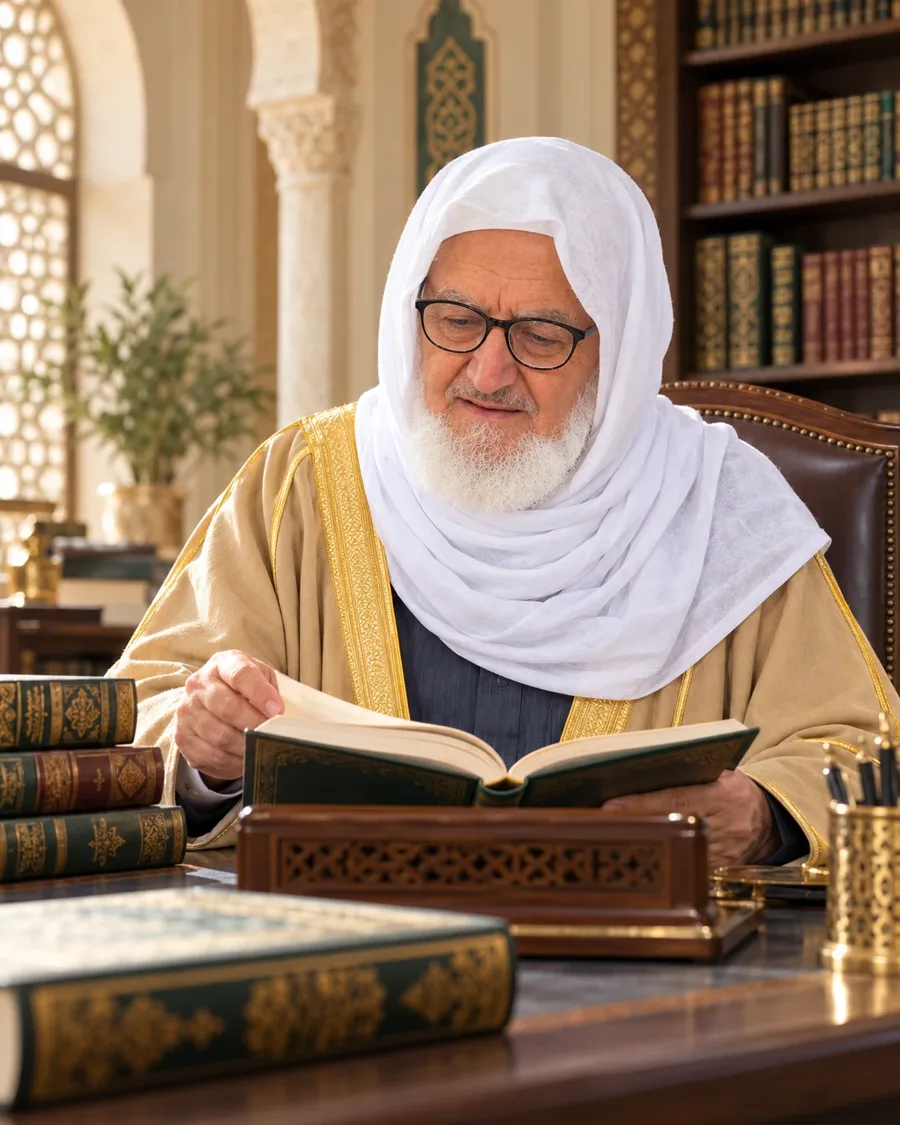
The Sheikh's da'wah spanned decades, during which he taught, preached, gave sermons, offered guidance and worked for social reform. His work took him to several mosques in Nahr al-Bared Camp, with Al-Awda Mosque among the main centres of his da'wah and teaching.
His role was not limited to sermons and lessons: he was close to people, listening to their problems, answering their religious questions, giving them advice and counsel, and working to reconcile those in dispute.
He also cared for students of knowledge and preachers, encouraged them to read, learn and continue their studies, and gave a number of them the opportunity to deliver lessons, talks and sermons at Al-Awda Mosque, especially from the late 1970s.
Among those who took part in the scholarly and da'wah activity at the mosque during that period were Dr. Ibrahim Khalil Baraka and Sheikh Muhammad Ibrahim Khalil, may God have mercy on them both, and other people of knowledge and da'wah.
The Sheikh believed that the religious mission cannot be carried on by the effort of one person alone, but by encouraging a new generation of scholars and callers to Islam who take on the responsibility and continue the path of teaching and guidance.
SevenHis Approach to Da'wah and His Intellectual Positions
The Sheikh's approach to da'wah focused on knowledge, teaching, worship and serving people. He did not belong to any party, political organisation or religious order, and he was keen to benefit from all the different scholarly and da'wah talents around him.
During the intellectual and political changes the region went through in the 1960s and 1970s, he defended Islam as the point of reference and discussed the ideas he saw as contrary to Islamic belief and values, through his sermons, lessons and talks.
He also stressed the importance of religious knowledge and awareness in confronting excess and extremism, and was keen to guide young people to gain a sound understanding of their religion and to verify what they understand, while caring for upbringing and building the Muslim character.
EightHis Creed in Tawhid
In his creed and his belief in the Oneness of God, he followed the creed of Ahl al-Sunnah wa al-Jama'ah and the way of the early generations of the Muslim community. He affirmed for God, Glorified and Exalted is He, the names and attributes that He affirmed for Himself in His Book, and that His Messenger ﷺ affirmed for Him in his authentic Sunnah, without distorting or denying them, and without asking how they are or likening them to anything.
So he believed that God, Glorified is He, has a Hand befitting His Majesty and Greatness, not like the hands of created beings, as God Almighty says: “There is nothing like unto Him, and He is the Hearing, the Seeing.” [Ash-Shura 42:11] He did not liken the attributes of God to those of His creation, nor describe how they are, nor delve into their nature; rather, he believed in what is stated in the Book and the Sunnah in the manner befitting God, Glorified and Exalted is He.
He affirmed that God, Glorified is He, is above His creation and established above His Throne in a manner befitting His Majesty, while declaring Him far above any likeness to created beings, believing in His words: “The Most Merciful [who is] above the Throne established.” [Taa-Haa 20:5] and His words: “There is nothing like unto Him, and He is the Hearing, the Seeing.” [Ash-Shura 42:11]
This is the approach of affirmation together with transcendence, based on believing in what came in the Book and the Sunnah, without distorting or denying, and without asking how or likening.
NinePalestine in His Thought and Speech
Palestine remained present in the Sheikh's life, thought and words: it was the home of his childhood, and he was forced to leave it in the year of the Nakba. His own experience of displacement and exile shaped his concern for the Palestinian cause and his attachment to the memory of the homeland.
He addressed the cause in his sermons and talks from a religious and heartfelt perspective, calling for the fundamental Palestinian principles to be upheld and for the rights of the Palestinian people never to be given up.
For him, Saffuriyya was not just the place where he was born, but part of his memory and identity. He carried its memory with him through the years of exile, and his bond with it remained alive in his heart and in his words.
TenBooks and His Scholarly Library
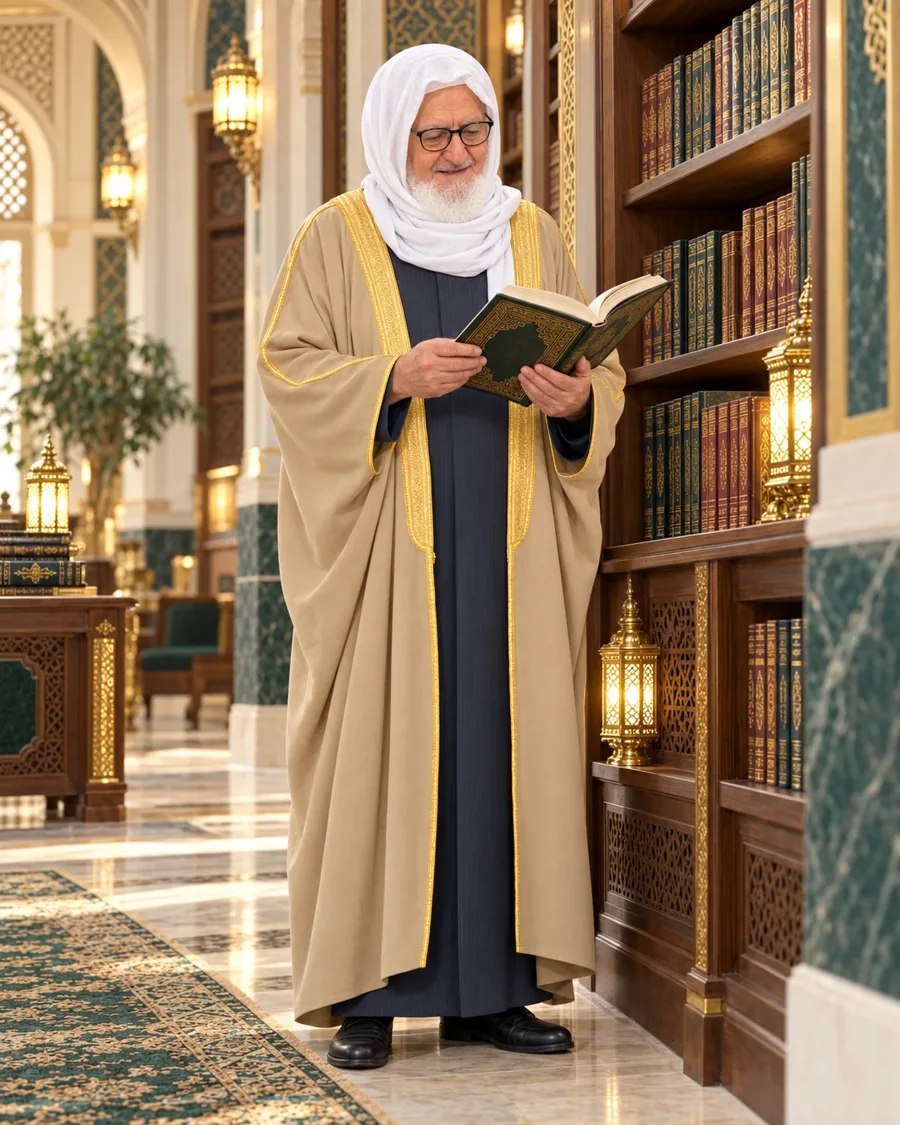
Books held a special place in the Sheikh's life. He read constantly and took care to collect books and Islamic reference works, until he had built a scholarly library that was an important part of his life of learning.
However, the events in Nahr al-Bared Camp, with the destruction and displacement that came with them, cost him most of his library. Despite this loss, his attachment to books never ended: he went back to collecting what books he could, and rebuilt his library as far as he was able.
This experience shows the place of knowledge in his life, and his bond with books as a means of learning and teaching, and of preserving knowledge and passing it on to future generations.
ElevenDisplacement and the Resumption of His Da'wah
The events in Nahr al-Bared Camp, with the destruction and displacement that came with them, were a harsh chapter in the Sheikh's life: he was forced to leave the place where he had spent many years of his life, and he was away from the pulpit for a time.
When the residents returned and the camp was rebuilt, he resumed his lessons and da'wah in other mosques, including Al-Quds Mosque and Khalid ibn al-Walid Mosque, continuing his mission of teaching and guidance as far as circumstances allowed.
So the ordeal was not the end of his journey but a new stage of it, in which he remained committed to his role in teaching and da'wah, despite the losses and the scars the events left behind.
TwelveFamily life
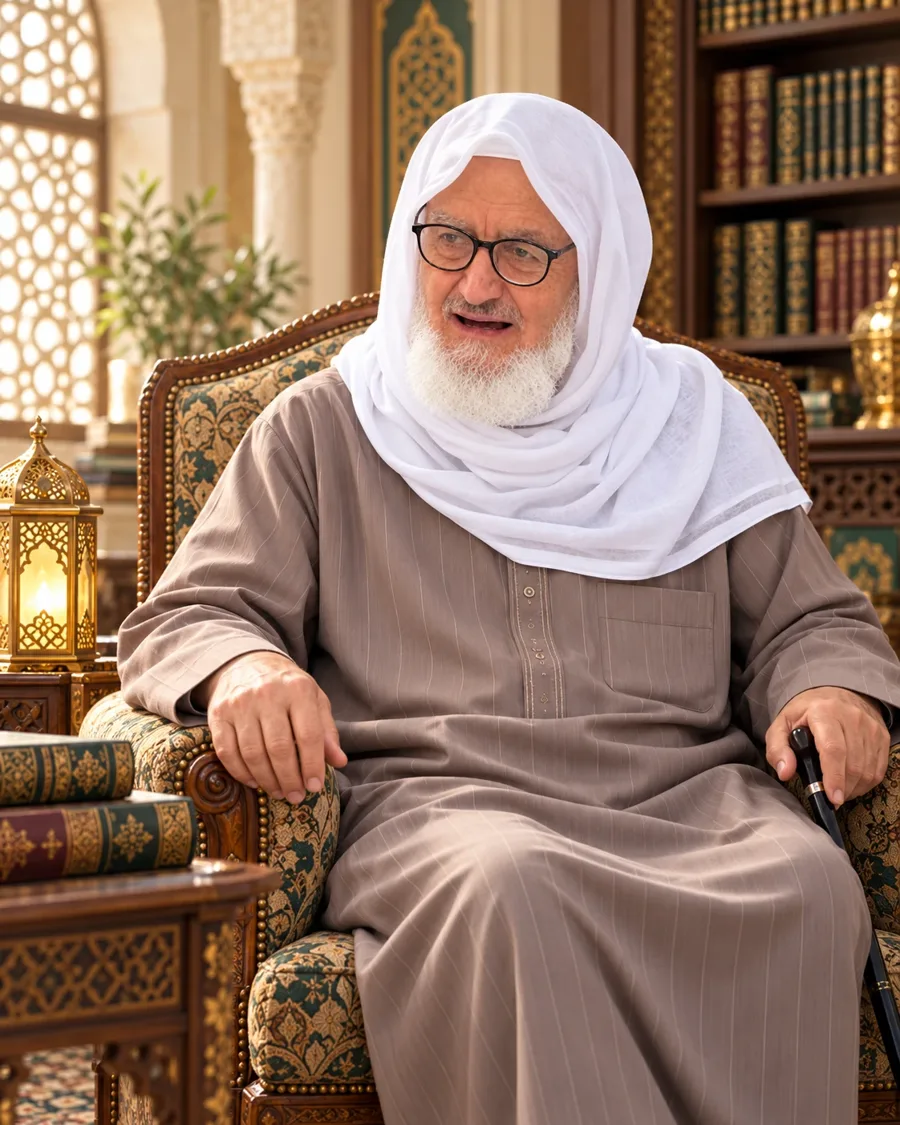
God blessed Sheikh Ahmad Abdelghani with two sons and two daughters: Dr. Sheikh Mohammad Ahmad Abdelghani, Hajj Abdullah Abdelghani, and two married daughters. He has twenty-five grandchildren. His devotion to knowledge and faith shaped his family life, and his experience in scholarship and da'wah shaped his son Dr. Sheikh Mohammad Ahmad Abdelghani and his path in Islamic scholarship. His family remains one of the ways his life story continues, carrying memories, experiences and values tied to his life in Palestine and Lebanon.
ThirteenHis Impact on the Community and His Contributions
The Sheikh left his mark on religious and social life in Nahr al-Bared Camp through his many roles as teacher, preacher, caller to Islam, counsellor, marriage registrar and social reformer.
The most notable aspects of his contribution include:
- Religious education: teaching children and students, spreading religious knowledge, and attention to Shafi'i jurisprudence without partisanship for the school.
- Preaching and da'wah: delivering sermons, lessons and talks in the camp's mosques for decades.
- Guidance and reconciliation: listening to people's problems, giving advice and counsel, and working to mend relations between people.
- Encouraging students of knowledge: giving preachers and students the chance to take part in lessons and sermons, and urging them to keep learning.
- Care for books: building a scholarly library, and rebuilding part of it after most of it was lost during the events in the camp.
- Preserving Palestinian identity: keeping the memory of Saffuriyya and the Palestinian cause present in his words and his awareness.
The Sheikh's influence is not limited to the roles he carried out; it extends to the memories and examples he left in the hearts of those who knew him or learned from him. For many, his presence is linked with knowledge, guidance and closeness to people, and with his determination to continue his da'wah despite hardship.
FourteenKey milestones in his life
- 1936
Born in the village of Saffuriyya, in the Nazareth District of Palestine.
- 1948
Displaced with his parents to Lebanon during the Palestinian Nakba.
- 1954
Settled in Nahr al-Bared Camp and began his work in teaching and da'wah.
- 1959
Performed the Hajj for the first time and recorded his memories of the journey in poetry.
- 1961
Opened a small shop next to the Sa'sa' Mosque.
- 1964
Became preacher of the Sa'sa' Mosque, later known as Al-Awda Mosque.
- Later
Taught Islamic education and served as marriage registrar.
- 2007 onwards
Affected by the events in Nahr al-Bared Camp and lost most of his library; resumed his da'wah after the residents returned.
FifteenThe Significance of Documenting His Life
Documenting the life of Sheikh Ahmad Abdelghani is not merely a record of dates and responsibilities; it preserves the human and scholarly experience of a Palestinian man who carried the marks of the Nakba and exile, and then contributed to religious and social life in a refugee community.
His experience offers lessons in patience in seeking knowledge, perseverance in teaching, serving people, encouraging new generations, and preserving Palestinian identity and memory.
It also shows the role of scholars and preachers in building society, not through the pulpit alone, but through teaching, upbringing, guidance, social reform and daily involvement in people's concerns.
Conclusion
The life of Sheikh Ahmad Abdelghani is the story of a man who left Saffuriyya in Palestine, lived through the Nakba and exile, and then made his way through knowledge, work and da'wah in Nahr al-Bared Camp.
He began as a teacher of children, then taught Islamic education, and served as preacher and as marriage registrar, always remaining close to people and carrying the mission of knowledge, teaching and service to the community.
Though the Nakba and the conditions of exile kept him from returning to his homeland, Palestine remained alive in his memory, and he found in knowledge, da'wah and service to people a way to continue his mission and to preserve values and identity.
Preserving this biography preserves part of the Palestinian, religious and social memory of Lebanon, and documents the journey of a man who made knowledge, teaching, da'wah and serving people the centre of his life.
We ask God to bless his life and his work, to reward him with the best of rewards for the knowledge and service he has given, and to place the good he has planted in the scale of his good deeds.
This biography was written from an interview with him on 25 October 2026.